The decision
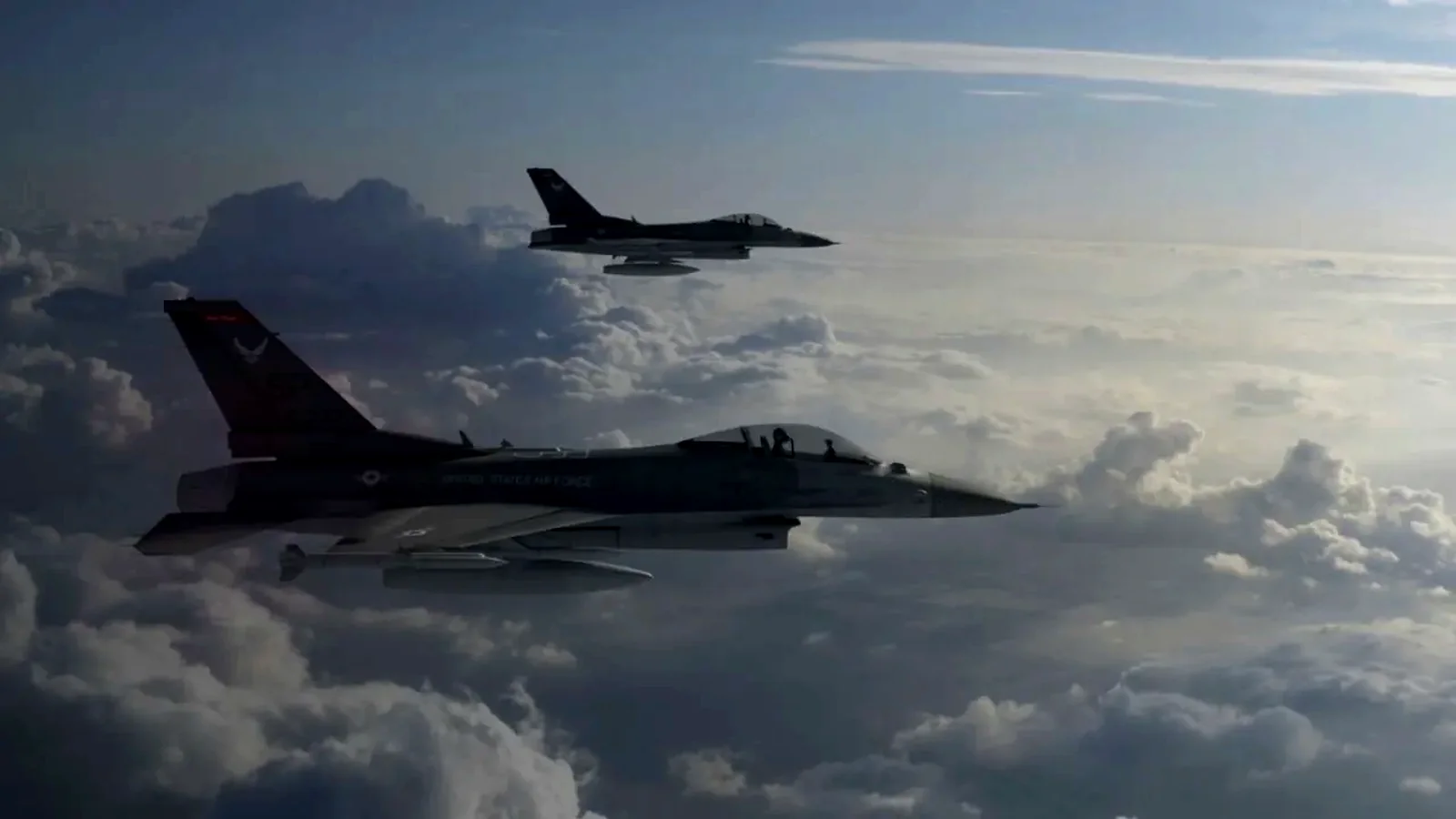
In 1951, over the Yalu River, two jets met in the first large jet war in history: the Soviet MiG-15 and the American F-86 Sabre.
On the specification sheet, the MiG won. It climbed higher. It flew faster. It hit harder. By every metric a commander could buy, the wrong side should have owned the sky.
It did not.
The Sabre changed faster. It had power-assisted controls where the MiG’s went heavy under load, and a bubble canopy that let the pilot see the whole fight. United States Air Force officer John Boyd described these advantages as fast transients. Chain enough of them together and the enemy stops acting and starts reacting.
Boyd built the OODA loop around that law: observe, orient, decide, act. The faster loop gets inside the other side’s decisions.
The operating lesson
The Sabre never won alone. It won inside a system of trained pilots, ground control, radar, doctrine, and tactics drilled to reflex.
A superior component in a weak system loses to an ordinary component in a fast one. The winner is not the better machine. It is the faster loop.
This matters because organizations are making the same mistake with AI. They compare models, buy tools, and treat isolated feature quality as the strategy. They are buying the better plane without building the operating system around it.
The current workflow problem
For thirty years, professional video was a supply problem. Cameras, crews, studios, budget, and calendar limited production. Generative AI removed much of that constraint. A studio now fits inside a laptop.
The market responded by accumulating tools. One for generation. Another for editing. Another for voice. Another for translation. Another for scheduling. Another for measurement.
The first results feel like magic. Then performance flattens because a tool makes assets, and assets are not outcomes. Two thirds of teams run sixteen or more tools. Many still cannot deliver one joined-up experience. AI agents are common in demonstrations but far less common in real production.
Tools everywhere. Results nowhere.
The frontier has moved from generation to orchestration. Generation is increasingly cheap and interchangeable. Orchestration is the work of making tools, people, controls, and feedback operate as one system aimed at one measurable goal.
Product versus ecosystem
The central argument of War of the Ecosystems is that organizations no longer compete as isolated products. They compete as ecosystems.
A single AI tool acts when someone gives it a prompt. It does not know whether the result changed customer behavior. It does not decide what the next piece should be. It does not automatically capture the expert correction that made the output usable.
An orchestrated ecosystem senses the market, commissions the work, ships it, observes what the audience does, captures expert corrections, and feeds the result into the next cycle before a rival finishes last month’s report.
The model inside that system is replaceable. The workflow context, correction history, evaluation set, and decision cadence are the durable assets.
The four-move workflow loop
1. Observe
Read the market continuously. Track what is rising and dying this week, not last quarter. Capture customer behavior, channel signals, search behavior, sales feedback, and campaign performance as operating evidence.
2. Orient
Apply human judgment. Strategists and subject experts turn signals into the point of view only this organization can own. They define the audience, the claim, the acceptable risk, and what quality means.
This is the command seat. Remove it and the workflow produces fast, confident nonsense.
3. Create
Commission the work across the formats the decision requires. That may include the article, film, short video, sales brief, social cutdown, translated version, or executive summary. The workflow should reuse approved evidence and preserve traceability across every derivative.
4. Act and measure
Ship the work and make every interaction a sensor. Measure against the operating goal, not vanity. Capture which claims landed, which formats converted, which expert corrections repeated, and which outputs should be stopped.
Then run the loop again, tighter and faster.
Close the part most teams leave open
Most organizations run half a loop. They observe a little, create a lot, publish, and stop. They count assets and move on. The result never aims the next cycle.
Closing the loop is the discipline that separates a system from a spray. A useful AI workflow must preserve four things:
- The source evidence used to produce the output.
- The expert correction that changed the output.
- The evaluation that decides whether quality improved.
- The business metric that decides whether the workflow deserves more funding.
Without those four records, the organization is not learning. It is generating.
Start with a minimum viable loop
Do not build the complete content operating system at once. Start with the smallest workflow that can sense, create, measure, and correct.
Choose one audience, one recurring content decision, one owner, one correction trail, and one outcome metric. Run it weekly. Keep the human review point visible. Measure review time, correction recurrence, production cycle time, and the business result.
Expand only after the loop proves that it learns.
Three questions before the next AI purchase
- Are we buying another plane, or building a loop?
- Who owns and closes the loop?
- Is our advantage the current tool, or the operating system around it?
Do not buy the better plane. Build the faster loop. The tools will change. The law underneath them will not.
Advisory application
For an AI workflow diagnostic, bring one workflow where production is frequent, expert corrections are costly, and the business outcome is measurable. We will map the current loop, identify where judgment is being lost, and define the smallest operating system worth testing.